.jpg)
Across the economy, digital transformation is accelerating. But it isn’t happening evenly.
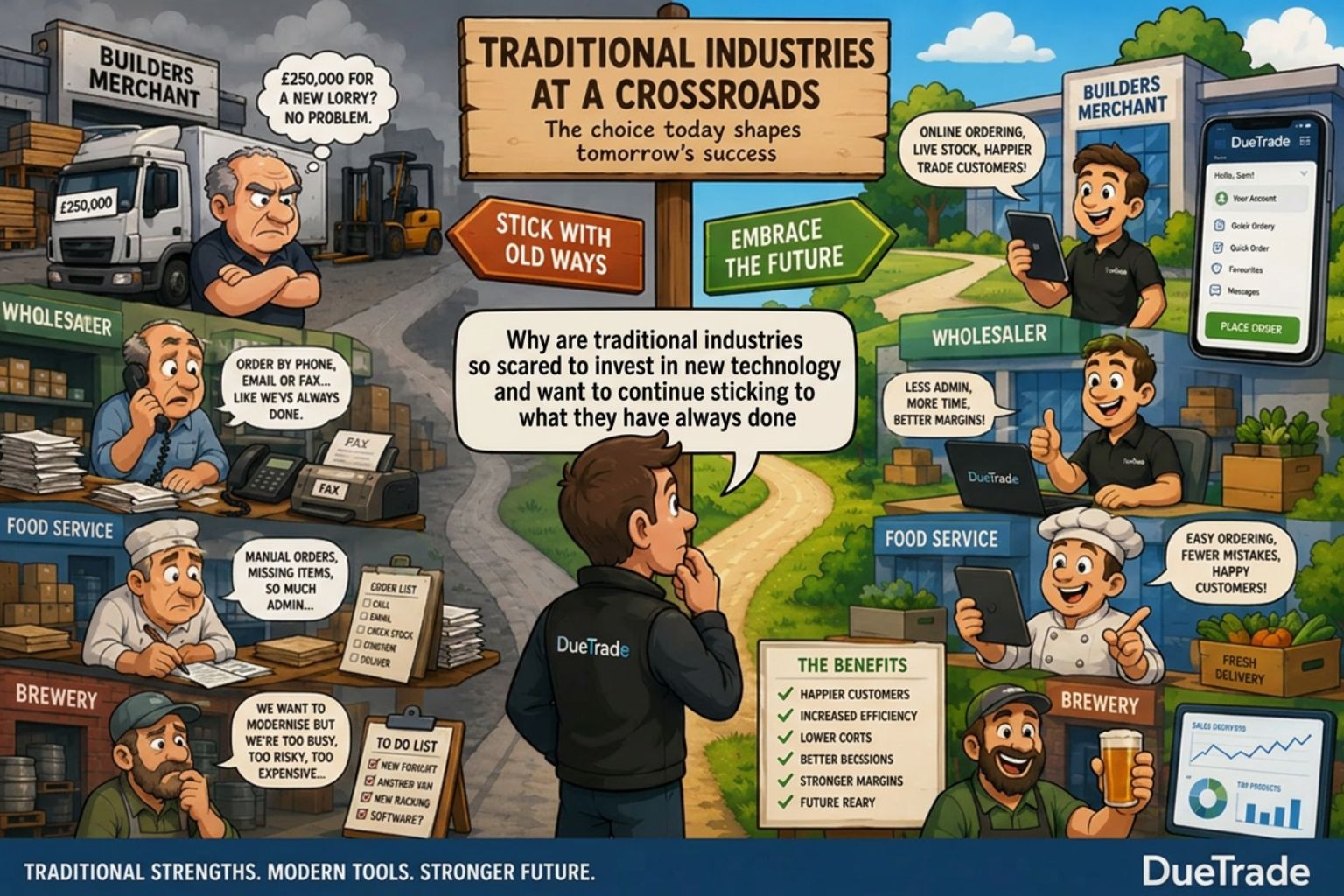
Some industries have embraced modern software, automation and data-driven workflows. Others, often the most operationally complex, are still running on spreadsheets, emails, phone calls and manual processes.
At DueTrade, we work closely with businesses in these sectors every day. What we see on the ground closely mirrors the data: some of the most important industries are also the most under-digitised.
Construction consistently ranks among the least digitised major industries.
What we see in practice is fragmented procurement, manual ordering, and huge reliance on phone calls and email chains. This creates delays, errors and poor visibility — especially as projects scale.
The opportunity isn’t flashy tech. It’s simple, connected systems that remove friction from everyday workflows.
Agriculture is often cited as one of the least digitally mature sectors, despite the availability of powerful tools.
In reality, many agricultural businesses are operationally sophisticated, but digitally underserved. Technology often fails not because farmers resist it, but because tools are too complex, poorly integrated, or not built for how they actually work.
Food producers, wholesalers, and hospitality suppliers sit in a strange middle ground: operationally intense, but digitally light.
We regularly see:
This is especially challenging in sectors with tight margins, perishable goods and fluctuating demand — where better data and simpler ordering can materially improve performance.
Public sector organisations and major infrastructure projects often operate on legacy systems that are difficult to change.
Yet these organisations often manage huge, complex supply chains, where even small efficiency gains can have an outsized impact.
Beyond sector differences, there’s a clear divide between large enterprises and small businesses.
This is where many digital transformation efforts fail: tools are designed for enterprise buyers, not the people actually doing the work.
At DueTrade, we didn’t start by asking “What features should we build?” We started by asking, “How do orders really happen today?”
Across construction, food, agriculture and local supply chains, the answer was remarkably consistent:
Our focus has been on removing friction, not adding complexity — helping businesses move away from emails, texts and spreadsheets without forcing them into heavy systems or long onboarding processes.
Just as importantly, we spend a lot of time advising businesses before they buy anything at all:
Falling behind on technology isn’t just a technical issue — it’s strategic:
Digital transformation doesn’t start with software. It starts with understanding how work really gets done.
That’s where we spend most of our time — listening, learning, and helping businesses modernise in a way that actually sticks.
If you’re operating in a sector that’s historically been left behind by technology, the opportunity is still very much there — but the approach matters.

Get in touch
The best way to see what your app could look like is to set up a call today.